


Requiem for a Mall Rat
I grew up during the era of mall rats. My high school was across the street from the local mall, which boasted two major department stores and scores of boutiques—including the cool places that appealed to teens. I snuck out of more than one gym class with my friends to window-gaze beneath the glare of shop clerks. I had no money, so it was the thrill alone that drew me.
These days, alas, department stores are giving the dinosaurs a run for their money in extinction’s greatest hits. Mall rats have jumped ship for online shopping, and their elders worship at the altar of Big Box. The reasons for this change are complex—wages, price points, the problem of retailing all things to all people—but the result is clear: the mall belongs to the past.
It makes me sad, and not just in a nostalgic way. Department stores were an important third space—not home, nor the office, but a place to go and gossip with friends. Designed to attract middle-class women, they once had tea rooms, fashion shows, and elegant change rooms with obsequious attendants. More importantly, visiting them was an occasion shared with other females in one’s community. They had a societal role as much as a commercial one.
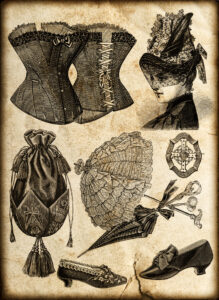
When they first came into existence in the Victorian era, they were a natural descendant of the 1851 Great Exhibition at the Crystal Palace in London, where eye-catching goods from everywhere in the world were displayed under one roof. Within a generation, “universal providers” came into being and, from them, the department store as we know it.
They were one of the first places women could legitimately go without a chaperone. With the advent of the railway, those resident in the newly established suburbs of London could easily hop a train and go for a day of shopping. Women quickly took advantage of this unaccustomed ease of movement that gave them time away from the restrictions of the home.
Naturally, there was initial moral panic. The Victorian ideal of womanhood, that innocent angel of the hearth, was mobile, in public, and engaging in commerce unattended! Where was the modesty? The critics deemed this new practice immoral. Society was doomed.
Perhaps, but there was money to be made. Cash won over fears of moral turpitude, and the phenomenon of women in public spaces flourished. We can thank these early consumers for claiming space and the right to enjoy it for pleasure. It’s no coincidence that many women’s clubs—hotbeds of outrageous notions such as female suffrage—were situated in London’s West End shopping district. So were other amenities, like comfortable eating establishments and the advent of decent public restrooms. The fairer sex was no longer confined to the home—they had won their place in the city’s teeming streets.
Of course, women now have rights and privileges our historical sisters barely dreamed of. We don’t need shopping malls to enjoy ourselves in public. Nevertheless, I feel a pang when I see another shuttered store. Once upon a time, they gave us a playground—and public freedoms—that we badly needed. This should not be forgotten as we retire to our couch to spend time with shopping apps.
For a deeper dive into this subject, I recommend Erika Diane Rappaport’s Shopping for Pleasure: Women in the Making of London’s West End, Princeton University Press, 2000.