


Figgy adventures
August 29, 2025 • No Comments
 With all the back to school vibes around, I began to wonder what the experience was like for kids in the time of the Hellion House books, or at least the Victorian era. There were differences in curriculum, but the experience of leaving summer freedom behind for the drudgery of the classroom would be consistent. No doubt back to school was woe and excitement in equal measure then as now.
Not surprisingly, the details of the experience depended a lot on who you were. There were boarding schools and day schools, and arrangements around meals provided by the school varied, especially between the economic brackets of the attendees. I did a little investigation into the kind of desserts/puddings kids would get (any excuse to research old recipes). There were intriguing names, such as “spotted dick” and “roly-poly.” They tended to be starchy and filling, with preserves or dried fruit as the primary interest. This makes sense, because a) children are bottomless pits b) the dishes could be cheaply produced in bulk and c) preserved fruit made sense in an era without reliable refrigeration and a still-evolving network of rapid long-distance travel.
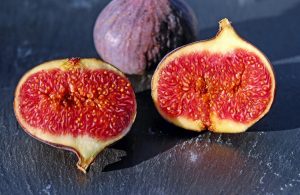
Currants and raisins were the most common fruit in the recipes I found. Another staple was dried figs, which tended to appear on more upper-class menus. This interested me as I had a bag of dried figs and no idea what to do with them. In the spirit of deep research (and fridge cleaning) I looked around for period options and their modern equivalents to concoct an enjoyable, historically-adjacent treat. I ignored the figgy pudding of Christmas carol fame because where, o where, is my pudding basin? and also it’s still too warm for any dish I need to douse in alcohol and set on fire.
 Happily there were plenty of non-flammable options. The first effort out of the oven was an apple and fig tart. It had some interesting features, including a layer of ground almonds at the bottom of the pie to soak up a yummy maple syrup sauce. Though promising, it wasn’t quite a five-star result. I like my pie fillings ooey-gooey and this was too dry and under-stuffed. Different apples and changing up the proportions would be necessary to make a properly sinful filling. I will give this one another go.
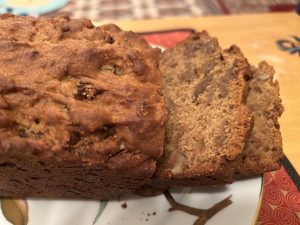
The second option I’m happy to share because it is a nicely-textured loaf that tastes like autumn. It rose well, has a moist crumb, and properly balances the sweet and spicy elements. This recipe soaks the dried figs in black tea to soften them, which imparts a faintly smoky taste that pairs beautifully with the other seasonings. I highly recommend grating the nutmeg fresh for maximum pop. I could see the students at the University of Londria wrapping a slice in a napkin to eat while they bolted to their next class.
Here’s the recipe for that one. Pro tip: be sure to cut the woody stems out of the figs
Preheat oven to 350F
Sift:
1.5 cups of flour
1 tsp baking powder
1/2 tsp baking soda
1/2 tsp cinnamon
1/2 tsp nutmeg (grated fresh)
Cream:
1/2 cup butter
2/3 cup brown sugar
Add: 3 eggs and 1 tsp vanilla
Then add the dry ingredients a bit at a time, along with:
1.5 cups of dried figs, chopped and soaked in very hot black tea for a half hour (then drain before adding to recipe)
1/2 cup chopped walnuts
Pour into a greased loaf tin and bake for 50 minutes
Cool on a wire rack before slicing.
Enjoy!
Victorian Funeral Biscuits – the Recipe
April 26, 2021 • 4 Comments
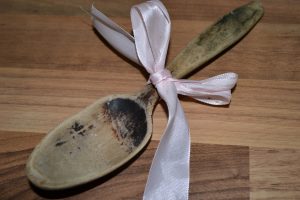 Funeral biscuits played a part the Victorian tradition of death and mourning. I cover their history in my previous post on the topic, and now we come to the recipe.
Sadly, it’s hard to know exactly what the biscuits tasted like. Even if they were available in a museum somewhere, I’m not like the Eating History guys and willing to nosh on decades-old treats. To make things more difficult, I could not find funeral biscuits in a cookbook I trusted. One recipe included modern ingredients and others were vague to the point of uselessness. So, I set out to invent something from those items that appeared in the majority of texts.
Consistent ingredients were flour, sugar, and caraway seed. I tested various combinations of other things, including icing sugar, milk, and cornstarch. Results varied from interesting charcoal to hard as a brick. When I did finally achieve a good result, I understood why rationing during wartime finally finished off the production of these biscuits–they’re no good without lashings of butter.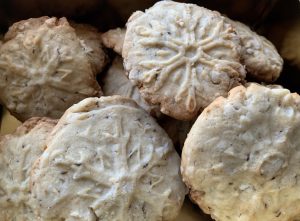
Victorian Funeral Biscuits
Preheat oven to 350 F
Cream: 1.5 cups of sugar with 1 cup of soft butter
Add: 1 tsp vanilla and 2 extra-large beaten eggs (or 3 smaller ones). Mix until smooth
Sift: 2.5 cups of flour, 2 tsp of cardamon, and 1/2 tsp salt. Add to wet ingredients a bit at a time along with a tablespoon of whole caraway seeds (some recipes recommend toasting these before adding them to the dough).
Mix until all wet ingredients are absorbed. The dough will be slightly sticky. If you wish to use a cookie stamp, chill for a few hours before going further. Otherwise, make a small ball and press with a fork to form the cookie. Keep rinsing the fork in cold water to keep it from sticking in the dough.
Bake on a greased cookie sheet for 12 minutes or until the bottom just begins to turn brown. (Do not overbake!) Cool slightly before moving to a wire rack. The result should be a crisp, slightly caramelized bottom with a softer top.
 As noted above, this recipe is only an estimation of what the original Victorian funeral biscuits might have been like. The quality of ingredients today is very different, as those of us who experienced “Buttergate” can attest. However, I think this is a reasonable approximation of the buttery, slightly spicy biscuit that’s perfect with tea after a brisk seaside stroll.